


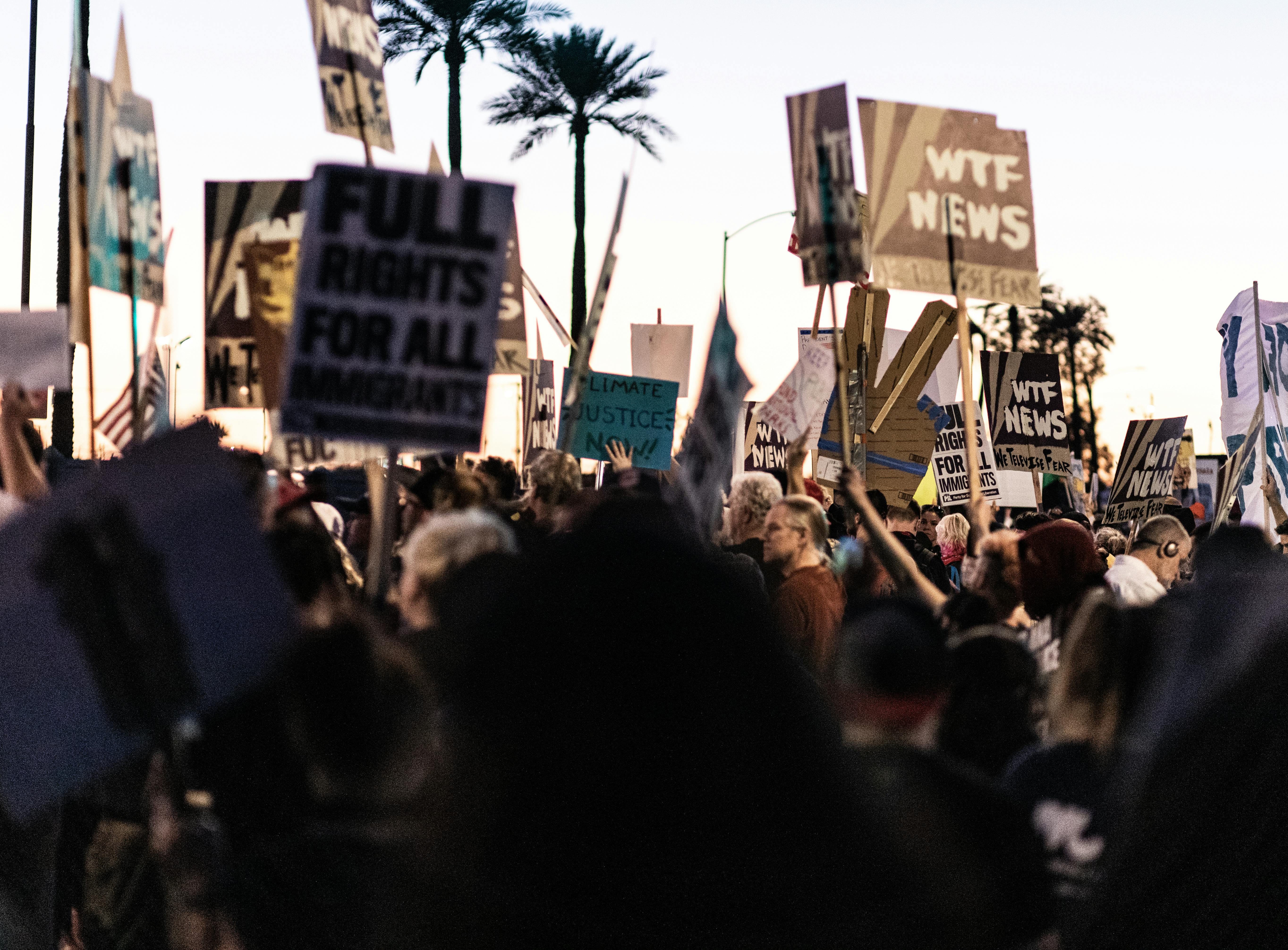
“Our Nation’s founding ideals are rooted in protests and free speech. These enduring ideals continue to shape and sustain our country to this day. Over the past 250 years, Americans have used their free speech rights to advance a wide range of causes, including suffrage, labor rights, the Civil Rights Movement, opposition to the Vietnam War, disability rights, the right to life and abortion rights, LGBTQ+ rights, and racial justice. One of the latest causes in this American tradition is opposition to the tactics and practices attributed to Immigration and Customs Enforcement (‘ICE’) agents when conducting immigration raids. . . . The presence of some violent actors did not give Defendants carte blanche to fire crowd control weapons indiscriminately into crowds of peaceful protesters, legal observers, and members of the press.”
Judge Gould, Los Angeles Press Club v. Noem
Decision Summaries
First Circuit
Beckwith v. Frey
The First Circuit vacated the preliminary injunction enjoining Maine’s Attorney General from enforcing a law that imposes a seventy-two-hour waiting period before a seller may deliver a firearm to a purchaser. In assessing the plaintiffs’ likelihood of success, the panel found the law’s commercial controls did not directly restrict the textual rights protected by the Second Amendment.
Second Circuit
Vidal v. Venettozzi
The Second Circuit held the plaintiff prisoner was entitled to due process protections to guard his protected liberty interest in avoiding disciplinary segregation, which carried atypical and significant hardships such as severe limitations on access to law library materials and personal hygiene facilities.
Fourth Circuit
Pharmaceutical Research & Manufacturers of America v. McCuskey
The Fourth Circuit affirmed the lower court’s grant of a preliminary injunction enjoining West Virginia from imposing additional conditions on drug manufacturers that already participate in a federal discount program. Rather than serving as mere regulation, the panel found the additional state restrictions improperly sought to “reshape the contractual bargain Congress made with private manufacturers.”
Fifth Circuit
Ryan v. United States
In a case brought by the families of several victims, the Fifth Circuit held that the Department of Justice did not violate the Crime Victims’ Rights Act when the Department entered into a non-prosecution agreement with Boeing and declined to prosecute the company for charges related to multiple deadly airplane crashes.
Parker v. Hooper
The Fifth Circuit vacated and remanded the lower court’s injunctive order seeking to impose strict remedial controls over the defendant state penitentiary, which discounted the prison’s ongoing efforts to address the issues during the lengthy litigation period. The panel noted the lower court was “deliberately indifferent” to record evidence and the boundaries of the Prison Litigation Reform Act.
Sixth Circuit
United States v. Farris
The Sixth Circuit ordered remedial measures, including a recommendation for disciplinary proceedings, against a criminal defendant’s appointed counsel for his improper use of generative artificial intelligence in the preparation of his pleadings. The briefs submitted to the Court included citations to genuine legal authorities that did not contain the purported quotations or propositions, which resulted in misleading legal arguments presented to the Court.
Seventh Circuit
Daugerdas v. Commissioner of Internal Revenue
In a case of first impression, the Seventh Circuit held that statutory law authorized the Internal Revenue Service to impose parallel civil restitution following a person’s conviction of a federal tax-related crime. The panel affirmed the $371 million civil restitution obligation on the defendant, which carried a different payment schedule than the separate $371 million obligation entered on his criminal case.
Eighth Circuit
Get Loud Arkansas v. Jester
The Eighth Circuit affirmed a preliminary injunction enjoining Arkansas from enforcing a state law requiring a handwritten or “wet” signature, finding the immaterial voting requirement likely violated the Civil Rights Act of 1964.
Ninth Circuit
Los Angeles Press Club v. Noem
The Ninth Circuit affirmed the lower court’s issuance of a preliminary injunction against the Department of Homeland Security, which sought to safeguard the First Amendment rights of protestors, the press, and the legal observers to engage in and to report on protests in opposition to the tactics and practices attributed to Immigration and Customs Enforcement agents. However, the panel remanded the matter to the lower court to fashion a narrower injunction focused on the parties entered in the case.
Eleventh Circuit
United States v. Florida
In a case that spans over a decade of litigation, the Eleventh Circuit held that the United States had the proper authority to sue Florida on behalf of hundreds of medically complex children for permanent injunctive relief under the Americans with Disabilities Act, and the panel affirmed the lower court’s order requiring the state to provide adequate services (with the exception of a few provisions).
Any opinions expressed here are our own. This article is not legal advice; if you have a legal issue, you should consult an attorney.
If you liked this article or have thoughts about it, please like or comment below (or email Ben at breese@flannerygeorgalis.com or Antonia at agelorme@flannerygeorgalis.com) and consider sharing it with your friends and network.
